
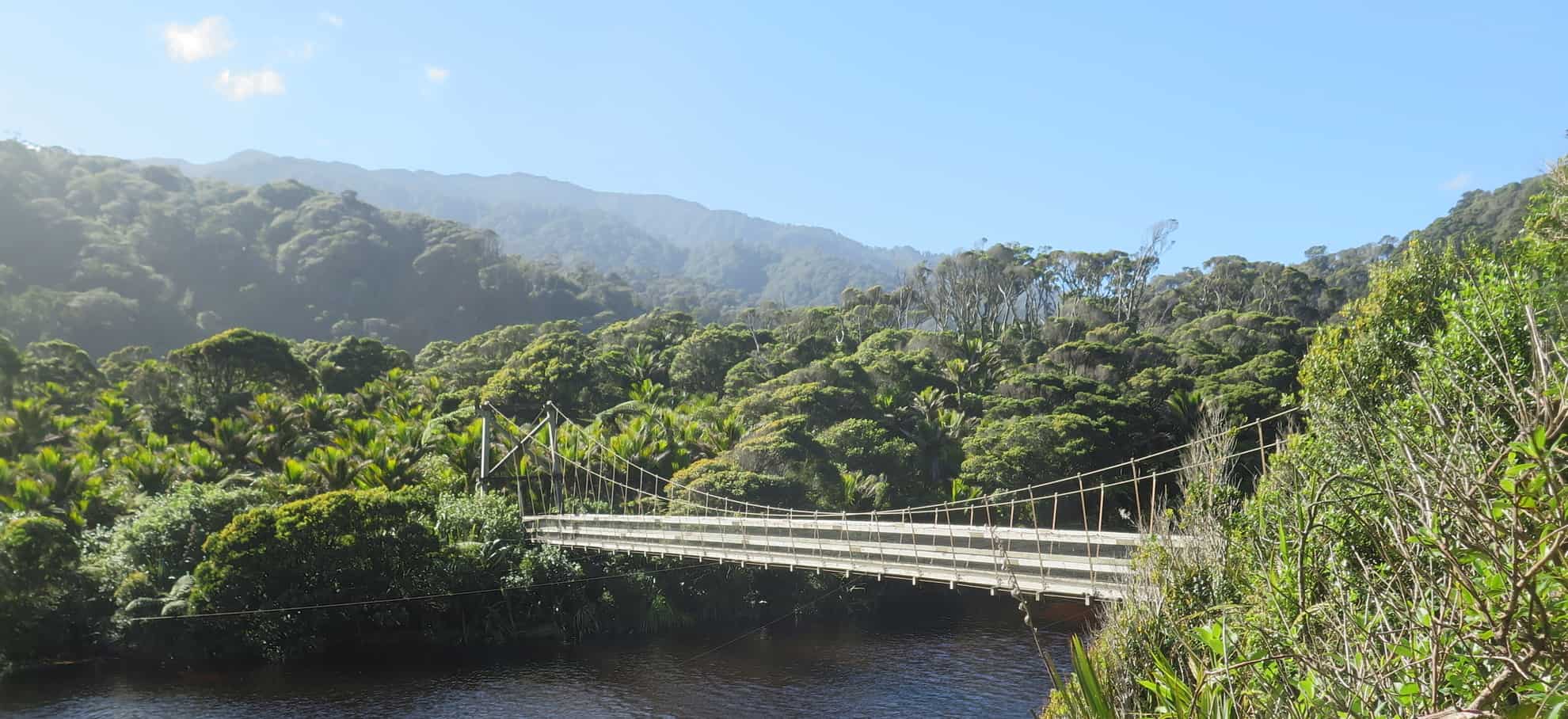
Heaphy Track Five day Guided Walk Experience
Whether you’re looking for respite from the mayhem or something special to do or just a break from daily life, walking the Heaphy Track with Southern Wilderness can now be part of your itinerary!
Why not join us for the trip of a lifetime on our Heaphy Track Five Day guided Walk.
Contact Us to book now! Or call us on +64 (3) 545-7544 . We look forward to hearing from you soon!
Itinerary
Day 1 – Brown Hut to Perry Saddle Hut (approx. 17.5km 5 Hours)
Our first day starts with an early pick up from your selected Nelson accommodation and traveling to Brown Hut at the beginning of the track for our final briefing and a mid-morning start. The track climbs gradually on an easy gradient through podocarp and beech forest to reach Flanagan’s Corner (the highest point on the track, at 915m). En route there are grand views of the Aorere Valley, and Golden Bay. It’s then a gentle stroll on to Perry Saddle Hut, which sits at 880 metres above sea level.
Day 2 – Perry Saddle Hut to Saxon Hut (approx. 12.4km 4 hours)
This is an easier day with only 4 hours walking. The track passes through kamihi and beech forest before reaching the wide expanse of tussock covered land known as the Gouland Downs. The track meanders down to Cave Brook, passing the famous ‘boot pole’, where trampers have tied their old boots. Past ‘the enchanted forest’, a limestone outcrop with caves and waterfalls, we continue over the final part of the Downs and climb gently to Saxon Hut, our accommodation for this evening.
Day 3 – Saxon Hut to Mackay Hut (11.8 kms approx. 3-4 hours)
After a leisurely morning and a late breakfast at Saxon hut we head off across the Saxon downs, crossing several bridged rivers along the way, if we’re lucky enough we might even see some Whio or blue duck, as we reach the end of Saxon downs we begin gently climbing a broad ridge where we cross over the boundary between the east and west department of conservation conservancies. From here we continue to climb towards the Mackay Downs The track here is also interesting as you will start to see the impressive pink coloured Karamea granite, a crystal-rich mix of quartz, mica and feldspar. We will also be passing by outcrops of giant granite boulders emerging from the tussock. The view from Mackay hut is spectacular and allows us to see right down to the west coast and Heaphy river mouth where we will be spending our last night. Now it’s time to relax while your guides prepare another fantastic meal while you sit and enjoy the spectacular views from the hut.
Day 4 – Mackay Hut to Heaphy Hut ( 20.5 kms approx. 6 hours)
We leave the picturesque location on top of the ridge at Mackay Hut this morning, and head off to an even more impressive location, the Heaphy River Mouth! From the hut we transect a great cross section of New Zealand flora, from sub alpine species on the tops, through stunted beech, and then down into ancient Podocarp forest. There are some great glimpses of the river as we head down this section, and as the track gets lower we also start to see the magnificent nikau palms that this section of the West Coast is famous for. Suddenly we reach Lewis hut at the confluence of the Heaphy and Lewis, and its packs off , and time to put your feet up while the guides organize another scrumptious lunch. The environment from here undergoes yet another drastic change; as we meander along the river side the towering Nikau Palms give the surrounds a truly tropical feel. Here at the river mouth we are greeted with the impressive west coast beach and its rolling surf. You’ll have the rest of the afternoon to relax or explore before the final gourmet dinner of the trip and hopefully a magical West Coast sunset for dessert!
Day 5 – Heaphy Hut to Kohaihai (approx. 16.2km – 5 hours)
We walk from the Heaphy Hut along a coastline studded with nikau groves to the track’s end at the Kohaihai River. This is a spectacular coastal walk and is rated as one of NZ’s best day walks the perfect way to complete your Heaphy adventure. Our van meets you at the Kohaihai River mouth from where we transfer you back to Nelson, with stops for lunch and afternoon tea on the way home.
Arrive back in Nelson at approximately 7 pm on Day 5.
The Heaphy Track Five Day guided Walk includes four night’s hut accommodation in Department of Conservation huts, all meals, guiding services, door to door transport to/from Nelson accommodation.
NOTE: The accommodation on the track is in Department of Conservation huts – these are basic, but comfortable and must be shared with other walkers. Guests carry their own pack containing personal clothing and sleeping bag. Guides carry all food, cooking utensils and safety equipment.
Price: $2495 per person
Contact us to book your Southern Wilderness Heaphy Track journey today!
Or call us on +64 (3) 545-7544 . We look forward to hearing from you soon!
Oct 2025 – May 2026
Available Departures
October November December January February 02,09,16 March 02,16,30 April 05,13,20 May 04
Oct 2026 – May 2027
Available Departures
October 19,26 November 02,09,16,23,30 December 07,14 January 23 February 01,08,15,22 March 01,08,15,22,29 April 05,12,19,26 May 03